The 2026 landscape for Real-World Asset (RWA) tokenisation has transitioned from a period of ambitious experimentation to one of rigorous institutional consolidation.
With the on-chain RWA market now surpassing $30 billion and Tier-1 financial institutions deploying native digital infrastructure, the threshold for "investability" has been fundamentally reset.
For founders, the challenge is no longer the technical minting of an asset, but the fiduciary architecture surrounding it.
In this new reality, capital does not migrate to the most innovative code; it moves toward the most robust legal structure.
The primary shift this year is the death of the "grey area." The arrival of comprehensive frameworks, such as the matured MiCA regime in Europe and the UK’s Digital Securities Sandbox, has eliminated the appetite for regulatory ambiguity.
Institutions now demand Universal Liquidity, the ability for an on-chain asset to be recognised, valued, and settled within traditional risk management frameworks. This requires a level of structural sophistication where the legal "wrapper" is not merely a formality, but a high-performance financial instrument in its own right.
The Path Forward
When we advise founders on bridging the gap between private assets and institutional digital wallets, we focus on the interplay between three critical legal dimensions:
1. In 2026, a token is only as valuable as its legal insulation.
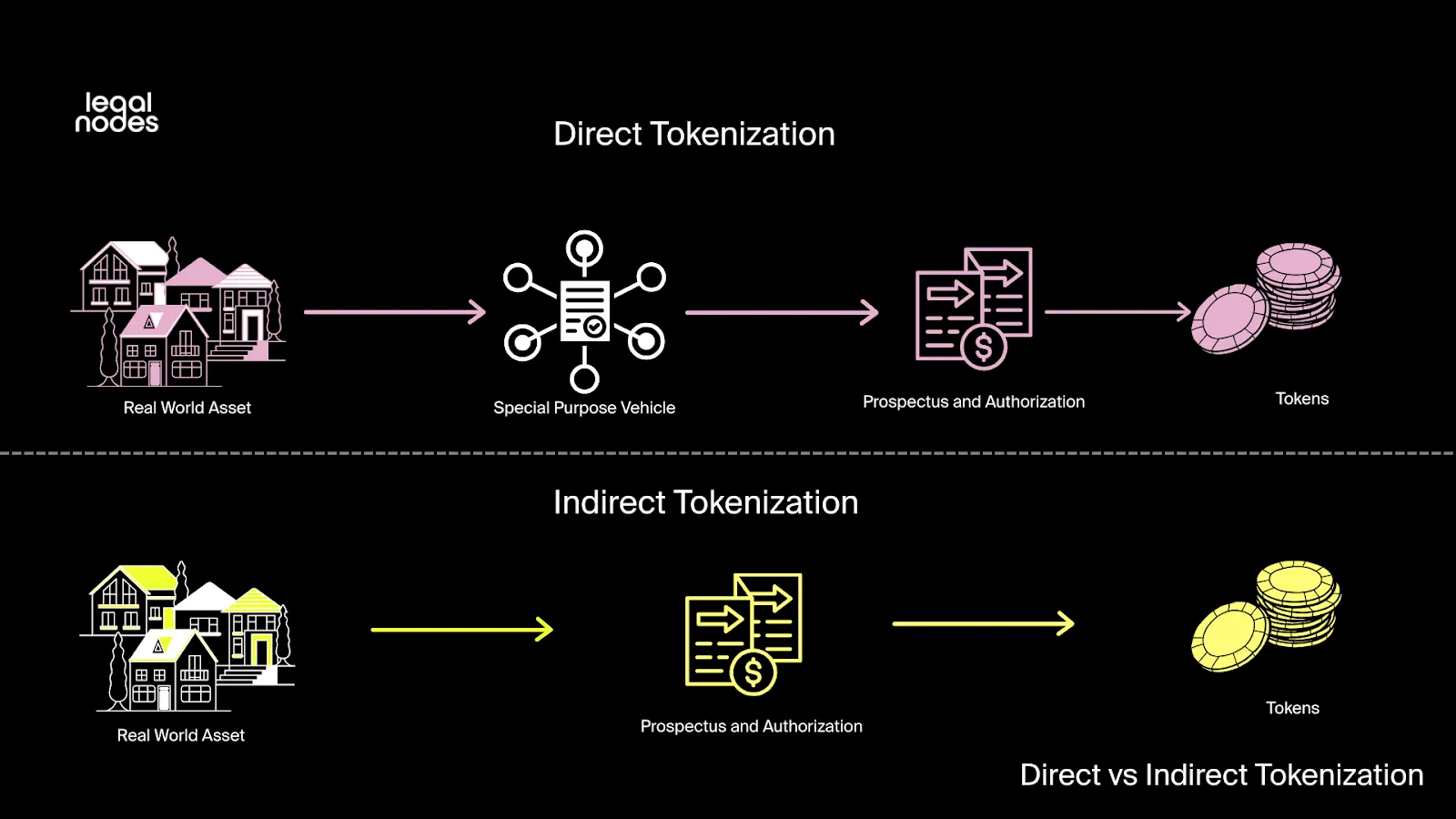
We move beyond simple trust structures to engineer multi-jurisdictional Special Purpose Vehicles (SPVs) that ensure the asset is entirely decoupled from the issuer’s balance sheet. The objective is to create a "sealed" vehicle where the investor’s claim remains unassailable, regardless of the technological or operational fate of the founding entity.
2. Compliance is no longer a peripheral gatekeeper; it is programmed into the asset’s lifecycle.
For an asset to be "institutional-grade," the legal logic must be embedded at the protocol level.
This ensures that KYC, AML, and tax-withholding obligations are automatically enforced across all secondary market transfers.
We structure these vehicles so that they are "compliant by design" allowing them to circulate within permissioned institutional ecosystems without manual intervention.
3. The allocator requires real-time attestation.
Structuring now necessitates a legal framework for "Oracle Governance", ensuring that the data feeds reflecting Net Asset Value (NAV) are legally binding and audited.
We design the bridge between the physical asset’s valuation and its digital representation, providing the transparency required for institutional risk committees to approve deployment.
For the founder, moving from a standard RWA project to an institutionally-structured vehicle transforms the commercial potential of the enterprise.
It is the difference between holding a niche digital token and managing a Global Liquid Asset.
The primary outcome is Capital Velocity. By eliminating the friction of T+2 or T+5 settlement cycles and replacing them with atomic, on-chain finality, you effectively increase the internal rate of return (IRR) of the underlying asset. Your holdings cease to be "stagnant" capital; they become Programmable Collateral.
In Conclusion
In this environment, a properly structured asset gains "superpowers."
It becomes eligible for use in institutional repo markets, can be integrated into automated wealth management platforms, and enjoys a liquidity premium that "crypto-native" projects simply cannot access.
You are no longer searching for liquidity; you are building a structure that liquidity is configured to find.
In 2026, the technology behind tokenisation is a commodity. The true arbitrage, and the only remaining barrier to entry, is Legal Engineering.
The most successful founders of this cycle are those who recognise that their structure is their product.
Our role is to ensure that your asset’s legal and technical "plumbing" is invisible to the investor but impenetrable to the auditor. We provide the structural certainty that allows global capital to say "Yes."